This piece of writing has been in my notebook and the back of my mind for a few years now. I'm going to share an early draft because that's one of the purposes of this blog—to practice sharing my thoughts, even before I feel they're "perfect" (because they rarely ever get to that stage). It's scary to post something that isn't polished and doesn't say exactly what I want it to yet! Maybe later on I'll take this and revise it and re-post it to show its progression.
Kusuguri-zeme
Today, a person who I thought was my friend betrayed me—he took away my freedom, made me lie to all my friends, and inflicted pain on me. To make matters worse, he did all of this in my presence, while laughing maniacally. Maybe I need to be better at choosing friends.
What did he do? Inflicted gargalesis in me, in front of family and friends.
It began innocently enough, or so I thought. He came into the room close to where I was standing at a public gathering. I was distracted for a moment by someone talking to me, and that's when he struck. He dove in (I imagine—admittedly, I didn't see this part), eyes flashing maliciously and two fingers ready. He jabbed quickly in, poking my sides. An involuntary burst of laughter forced itself from my throat, followed shortly by a quick jerking motion, making me look like a loony chicken.
He did something I didn't want him to do; he broke my personal bubble! Capital offense. But he didn't stop there.
He proceeded to tickle me until I was on the floor, twitching breathlessly. "Birthday girl! Birthday girl!" he chanted. My friends were laughing with him—he turned even them against me. In a matter of seconds I had been forced to do something I did not want to do: I had kicked and squeaked and snorted and giggled, all without wanting to, or even thinking about it. He had become my domineering puppet master, and I his puppet-slave. Weak from the exertion, I really could not exert my strength enough to stand for several moments after he ceased tickling me.
Tickling—ha! It seems like such an innocent word. But I know, as others do, of its evil nature. My research shows me that such tactics as this young man employed on me are common in multi-sibling homes. One sibling will tickle the other to gain control over him or her. In those "tickling sessions,"
the tickler is not only exerting physical control over the sibling; he is also bullying his sibling psychologically. That psychological damage can follow a child all the way through to adulthood. This kind of bullying for dominion over its victim is hard to stop because the victim gives all the same signs of a ticklee in a tickle fight for fun (to think of doing this for fun!). That brings me to the next charge I place at my ex-friend's door.
A definition of lying is to give a false impression, or to lead others to believe something that is untrue by your words or actions. My (ex-)friend made me lie, in that I was not enjoying being tickled and I didn't want him to tickle me (such an invasion of personal space!), yet he made me laugh and give signs of enjoyment. My outward signs and inward feelings were not in accord, so he was making me lie.
I could even go further without going too far: that he tortured me. In ancient Japan, they called it kusuguri-zeme - merciless tickling. They used to to punish (yes, punish) or otherwise torture high-profile or above-the-law perpetrators. Kusuguri-zeme was easily begun, easily terminated, and left no telling marks to incriminate the administrator of the tickle-torture. Sever other nations have (unofficially of course) used similar methods to punish, humiliate, or otherwise weaken their targets. Among the variety of torture devices used to achieve this most effective pain-inducer were feathers, the fast and easy fingers, and the goat method. This last one was carried out by strapping the victim's feet in the stocks so they couldn't pull away. Then the torturers would pour salt water over the victim's feet to make them attractive to the goat. Then they would release the goat, which would then proceed to lick the sensitive underside of the victim's feet.
Current thoughts on this draft
I know this draft is off the mark, but at least I have something written down!
I'm not sure if I'm going for making the speaker totally serious, or aware that she's being facetious.
I feel like this is a way to point out ways that people interact with each other that make it hard to be true to themselves or to speak their mind. A kind of oppression that is hard to fight because the person imposing it may not realize the position he or she is putting other people in, or past experiences or societal norms say that this kind of behavior is good and acceptable.
In case you haven't heard of it before, gargalesis is the technical term for laugh-inducing tickling.
Wednesday, July 1, 2015

Friday, May 22, 2015
Boring.
Some days I don't want to be deep.
Sometimes I want to just talk about something only mildly interesting. Or not worry about what to talk about.
Something that won't tug my heartstrings, set my feelings on fire, or make my mind explode.
In some ways, normal and boring are just what a soul needs.
That is all.
Sometimes I want to just talk about something only mildly interesting. Or not worry about what to talk about.
Something that won't tug my heartstrings, set my feelings on fire, or make my mind explode.
In some ways, normal and boring are just what a soul needs.
That is all.
Saturday, May 9, 2015
On Labor
The last few months, after leaving a previous job, the topic of work and what exactly it is has been on my mind. I am thinking of writing a series of posts about work to explore what it is and how the notion of work affects what we choose to do in our daily lives. In this installment, I focus on a synonym for work: labor.
Labor. What does labor mean?
What I think of first, and maybe this is because I'm looking forward to having a baby, is giving birth. But more generally, labor is work. Typically I think of labor as work that is difficult, but toward a certain end.
1) vessel, creation, object
2) an earthen vessel; usually (painful) toil; also a pang (whether of body or mind):—grievous, idol, labor, sorrow.
Labor. What does labor mean?
What I think of first, and maybe this is because I'm looking forward to having a baby, is giving birth. But more generally, labor is work. Typically I think of labor as work that is difficult, but toward a certain end.
Recently I was reading in the book Hypnobirthing: The Mongan Method, and it said something that
has made me think. It said that a Hebrew scholar said that the word used to tell Adam that he would work
and toil and labor in the field was the same word used to tell Eve that she
would work and toil and labor to bear children. I was curious about that, so I looked up a few different versions of Genesis 3:16-18. I didn't find that many of them used the same word, but they did have different words that hit around the same idea, which I thought was interesting. (Here are a couple I looked at Hebrew Interlinear Bible, NIV.)
 |
| By anonymous (Queen Mary Master) [Public domain], via Wikimedia Commons |
Labor
One awesome site I found did have the same word. And I'll go into some detail on that now. I hope my clumsy research skills don't completely muddy the original meanings here…
עִצָּבוֹן
(click on the Hebrew characters to go to the page I got this from)
 1) pain, labour, hardship, sorrow, toil (from Brown

—Brown-Driver-Briggs (Old Testament Hebrew-English Lexicon)2) worrisomeness, that is, labor or pain:—sorrow, toil.—Strong's (Hebrew & Chaldee Dictionary of the Old Testament)
Ok, so lots of cool stuff here.
A) Since the word is the same, Eve wasn't being singled out and given a terribly painful punishment. And if painful childbirth was to be her curse, then Adam was cursed with a pain that intense as well—do we see that? I don't think there is any specific thing that causes that level of pain. I would conclude that women are not destined for terribly painful childbirth as a result of this "curse." Whew. I'm glad I figured that one out!
B) Pain was a novel concept to both Adam and Eve. This emphasis or introduction of the notion of pain may have been with the purpose to instruct, rather than simply to punish. More on this in a bit.
C) They were the same word used in a parallel way. If you take out the notion that these are a punishment, they could simply be tasks or assignments. Kind of like, "Grady's work will be the garden and Taylor's work will be the kitchen." It is their labor, their assignment, to do those things.
D) The definition including "worrisomeness" is interesting. Was this simply telling them that their main concerns would be bearing and rearing children (and all of the worry and toil that entails) for Eve and laboring to provide for his family (and all of the worry and toil that entails) for Adam? This really makes me think that these "curses" are more about telling Adam and Eve what their roles will be (or suggesting the most effective roles, the ones they are best equipped to toil in) and preparing them for what is shortly coming in their sojourn in mortality than about pounding them with terrible punishments.
Instruction
I will say that whenever I've read or heard the account of what happened in the Garden of Eden, I've imagined the scene with God speaking to the two transgressors occurring rather like a scene when I had been caught in the act doing something my parents had explicitly told me not to do. I imagine the sinking feeling in my stomach, the shame burning in my cheeks, the wholly flattened feeling of knowing I had let my parents down, and the frantic flits of my mind to figure out some way to get out of the situation. The feeling of awaiting the swift chop of the blade of justice that is veritably felt hanging over me. The bubbling of resentment and helplessness and anger when the punishment feels more than any child could bear…
In this state of mind, I read or hear the conversation of Adam and Eve with their Father, first hiding, then admitting guilt, and then getting the punishment dealt on them. I'm sure other people have felt the same way I have, considering the negative connotations of "curse," "pain," and "fall," not to mention the familiarity of the situation with those of us who have broken rules and been punished for it.
But, then there's something new about considering that God, their Father, chose to tell them about the pain in the mortal world. A world they had no way to understand, coming so freshly from complete innocence. And to phrase it in a way that suggested a parallel, an equality between the toil that Eve and Adam would respectively perform. Could it be that he was preparing them? Teaching them?
 |
| Izaak van Oosten [Public domain], via Wikimedia Commons |
I imagine that God, the greatest Father we could ever think of, times about a million, was achieving several purposes in His conversation with his disobedient children. He was explaining the consequences of their actions, warning them of what was to come (which was outside of all of their experience to that point), and preparing them for the best way to organize themselves (in a family, where husband and wife have different roles).
What was God doing, in addition to explaining the consequences of their actions? Was He also teaching them what a mortal world was like—and how could He explain mortality without the word "pain"? Was he instructing them on what tasks they would need to focus on? His statement about what their worries would be could have been Him telling them what to expect in the world they would so soon walk out into. He instructed them in the roles each of them would fill—Adam as provider and Eve as nurturer of children—as well as warning that life would be hard and painful and potentially confusing for the couple soon to leave the plenty and ease of Eden.
These things weren't a curse flung at despised recipients; they were assignments and instruction. What a merciful and understanding Father.
Vessel
 |
| By Hans at Pixabay |
One more cool little tidbit. The word "sorrow" pops up twice in verse 16 (speech addressed to Eve). The second "sorrow" comes from this Hebrew word
עֶצֶב
which has some similar definitions with pain, toil, sorrow and labor, but it has a couple different things as well (these definitions are from two different sources).
2) an earthen vessel; usually (painful) toil; also a pang (whether of body or mind):—grievous, idol, labor, sorrow.
So this means that part her work and toil was to be a vessel—an earthen vessel—who creates bodies for her children. Cool!
Is it a coincidence that Adam later chooses to name her Eve, the mother of all living? I have thought it was weird before to take her curse so positively, or to rub it in by naming her after it, but what if it wasn't given with all of the negativity we see in it now? It seems that Adam was giving her the name that would define her, in good and bad—the name of mother.
Tuesday, March 17, 2015
Take My Yoke Upon You
Recently I was thinking about a scripture that I have loved at different points in my life, but I gained some new perspectives on it that make it even cooler. I thought I would share them here.
This is the scripture:
Matthew 11:28-30
This is the scripture:
Matthew 11:28-30
29 Take my yoke upon you, and learn of me; for I am meek and lowly in heart: and ye shall find rest unto your souls.
In these verses, Jesus Christ is asking us to come pull His load with Him. I think this is cool for several reasons: He wants us to come be a part of His work. He is inviting us to not only be a part of His work, but to actually work right next to Him.
I remembered hearing about teams of oxen in a talk by Edward Dube. In a contest to drag a five-ton sledge 3 feet, the teams of oxen who worked together did better than the stronger oxen that didn't work together.
 |
| By Klaaschwotzer (Own work) [CC BY-SA 4.0 (http://creativecommons.org/licenses/by-sa/4.0)], via Wikimedia Commons |
In this picture of two oxen yoked together, notice how close they are to each other. They can't even look to the side without the other one knowing about it. They are also both facing forward, and are both squared against the load they're pulling. I imagine the two oxen learning to become a team. One being a little slower to hit the yoke, getting distracted, or trying to pull the load all by himself.
When we act on the invitation to work next to Christ and take His yoke upon us, we're accepting similar conditions. We won't be able to hide our imperfections or laziness from Him (not that we ever can, but we will be more aware that He sees them), nor will we be able to slack off without feeling how it affects His work.
Sounds a little scary, actually. To have be working right next to the only perfect person to ever walk the earth, who is also the Son of God. Could be intimidating, even when your heart's in the right place. But then I thought of this scripture, and I think it sheds a different light on the situation.
Ether 12:27 "And if men come unto me I will show unto them their weakness. I give unto men weakness that they may be humble; and my grace is sufficient for all men that humble themselves before me; for if they humble themselves before me, and have faith in me, then will I make weak things become strong unto them."
So when we get closer to Christ, He will show us our weaknesses. BUT He shows them to us so we will be humble enough to accept His correction and help so we can improve. So our weaknesses can become strengths. And in Matt. 11:29, He says that He is meek and lowly in heart—approachable.
Christ isn't worried about taking a tally of how many times we mess up.
We're on the same team, and what He wants is for each of us to learn to
be a team with him. To learn how to pull His load with Him. Ok, that's cool. So the process of learning to be a team with Him will be hard, but the end goal is to . . . be a team with Christ. And He's the one offering to be there helping us—being yoked to us—every step of the way!
He wants us to improve, and just like in a team of oxen, where one ox can help the other keep moving forward, He will help keep us on the right track if we accept His yoke. And I've found that that is the case for me—when I consistently read scriptures and pray, I feel the Holy Ghost more in my life, and receive more invitations to delve deeper in the scriptures and to do a little better. I'm sure there is so much more helping power I could tap into if I would just commit to it!
I like having this visual of a team of oxen yoked together as a metaphor for my relationship with Christ. It seems too good to be true, to work side by side with the Savior with Him promising to teach me how to be a better team member, but He's asking me to come—so why not answer?
Monday, March 9, 2015
On Sunlight and Walks
On Sunlight and Walks
I like to walk
On Summer days
to feel the Sun
Its luxious rays
In Fall I feel the
Air so chill
creeping softly up the hill
But hearing crunch
of fallen leaves
brings the warmth of
smile to my cheeks
Winter takes the Sun away
I see it only through the glass
that acts a barrier to the warmth
and—standing—I can only see--not feel--its affects
Spring comes in lurches
Sometimes late
But whether in the morn or eve
Walking outside, begins anew
the Sunlight bursts from within
a paradise of golden whim
I like to walk
On Summer days
to feel the Sun
Its luxious rays
In Fall I feel the
Air so chill
creeping softly up the hill
But hearing crunch
of fallen leaves
brings the warmth of
smile to my cheeks
Winter takes the Sun away
I see it only through the glass
that acts a barrier to the warmth
and—standing—I can only see--not feel--its affects
Spring comes in lurches
Sometimes late
But whether in the morn or eve
Walking outside, begins anew
the Sunlight bursts from within
a paradise of golden whim
Monday, January 5, 2015
Speaking to Be Heard
Speaking to be heard
Why else would you speak?, you ask. These are some reasons I can think of:
To hear yourself talk.
To blend in.
To shock people.
To agree.
To get someone else to stop talking.
To break the uncomfortable silence.
People are uncomfortable with silence, and having words fill the air, regardless of their meaning, is more comfortable for most than a silence that sits heavy on your abdomen. And speaking is a great method of getting someone's attention—some people just speak so people will look at them, so they will be in the spotlight. It's not about their words—it's about them. Sometimes you speak to show that you agree, that you're part of the group, that you want the person speaking and the people nodding to be your friends.
But this post is about speaking to be heard. The kind of talking where you actually want the person to understand something, not just hear you speak, the kind of talking that has a mission other than reflecting the same thing everyone else is saying or drawing attention to yourself.
When—or why—would you speak to be heard?
Because you have something to say that matters.
You have something to say that matters. You have a unique perspective. You experience and feel and have a moral compass, and have wishes and hopes and desires that are good. Are valid. That can inspire people. That can wake others up to beauty, reality, love, purpose, their need to change.
What about when you don't feel like you have something important to say? Or that what matters to you won't matter to anyone else, so you should just keep your mouth shut? And you've talked yourself down (on the inside) so that it doesn't feel important to say what you think, to contribute your opinion, to give voice to the hurt someone has caused you . . . but you should speak up, if only to feel how liberating it is. And how much it helps you value who you are—because honestly, it takes valuing who you are and what you have to say to make the effort to speak up.
So when you have something that feels important to say, say it! You don't know if it might ring true to someone listening, or help you learn more about yourself or the people around you—or even cause a connection with those people—in the process.
Why else would you speak?, you ask. These are some reasons I can think of:
To hear yourself talk.
To blend in.
To shock people.
To agree.
To get someone else to stop talking.
To break the uncomfortable silence.
People are uncomfortable with silence, and having words fill the air, regardless of their meaning, is more comfortable for most than a silence that sits heavy on your abdomen. And speaking is a great method of getting someone's attention—some people just speak so people will look at them, so they will be in the spotlight. It's not about their words—it's about them. Sometimes you speak to show that you agree, that you're part of the group, that you want the person speaking and the people nodding to be your friends.
But this post is about speaking to be heard. The kind of talking where you actually want the person to understand something, not just hear you speak, the kind of talking that has a mission other than reflecting the same thing everyone else is saying or drawing attention to yourself.
When—or why—would you speak to be heard?
Because you have something to say that matters.
 |
"Italian Gas Horn" by Edvvc - Own work. Licensed under Creative Commons Attribution-Share Alike 3.0 via Wikimedia Commons - http://commons.wikimedia.org/wiki/File:Italian_Gas_Horn.JPG#mediaviewer/File:Italian_Gas_Horn.JPG
|
What about when you don't feel like you have something important to say? Or that what matters to you won't matter to anyone else, so you should just keep your mouth shut? And you've talked yourself down (on the inside) so that it doesn't feel important to say what you think, to contribute your opinion, to give voice to the hurt someone has caused you . . . but you should speak up, if only to feel how liberating it is. And how much it helps you value who you are—because honestly, it takes valuing who you are and what you have to say to make the effort to speak up.
So when you have something that feels important to say, say it! You don't know if it might ring true to someone listening, or help you learn more about yourself or the people around you—or even cause a connection with those people—in the process.
Tuesday, September 2, 2014
Flavors of Silence
Flavors of Silence
Thoughts on sharing...and withholding...our thoughts from those around us.
(What thoughts, actions, and feelings fill the space that we otherwise leave empty of sound?)
To that I say, no more silence. It's time to speak up.
(What are the many kindnesses and actions we do without marring them by speech?)
Yet...what kindnesses are marked only by our willingness not to speak? Or what peace is left undisturbed by us having the restraint to leave it be, like the moonlit meadow laid with newly-fallen snow? There are so many other ways to express ideas and feelings. When to use which?
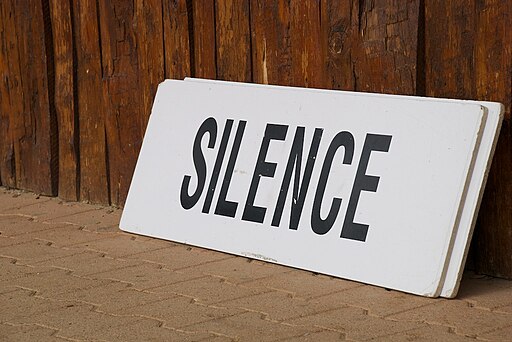
What does silence mean, after all? It can be mean-spirited, inspired by fear, or maintained only by self-restraint.
I would like to examine this more in future posts...in the meantime, what are your thoughts on silence? What causes it? When have you wished you would have spoken? Kept your mouth shut? When is it helpful and when is it hurtful? When is it wrong to stay silent? Can we be silent while still voicing something? How do we do that? When is it best to speak, and when best to stay silent?
Thoughts on sharing...and withholding...our thoughts from those around us.
(What thoughts, actions, and feelings fill the space that we otherwise leave empty of sound?)
To that I say, no more silence. It's time to speak up.
(What are the many kindnesses and actions we do without marring them by speech?)
Yet...what kindnesses are marked only by our willingness not to speak? Or what peace is left undisturbed by us having the restraint to leave it be, like the moonlit meadow laid with newly-fallen snow? There are so many other ways to express ideas and feelings. When to use which?

What does silence mean, after all? It can be mean-spirited, inspired by fear, or maintained only by self-restraint.
I would like to examine this more in future posts...in the meantime, what are your thoughts on silence? What causes it? When have you wished you would have spoken? Kept your mouth shut? When is it helpful and when is it hurtful? When is it wrong to stay silent? Can we be silent while still voicing something? How do we do that? When is it best to speak, and when best to stay silent?
Subscribe to:
Posts (Atom)